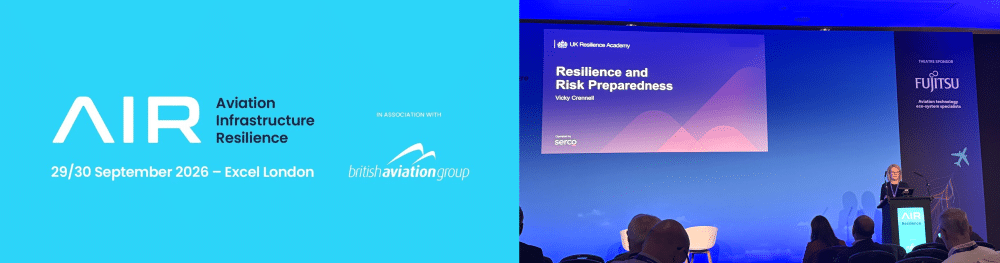
On 29 September, I had the opportunity to speak at the AIR Conference delivered by Meeting of Minds at the Excel in London, bringing together professionals from across the aviation communities.
The conference explored the growing challenges facing critical aviation infrastructure, from operational disruption and security threats to technological dependence, climate impacts and the increasing complexity of interconnected systems. Throughout the day, speakers shared examples of how organisations are strengthening resilience through improved planning, governance, technology, data, infrastructure design and operational coordination.
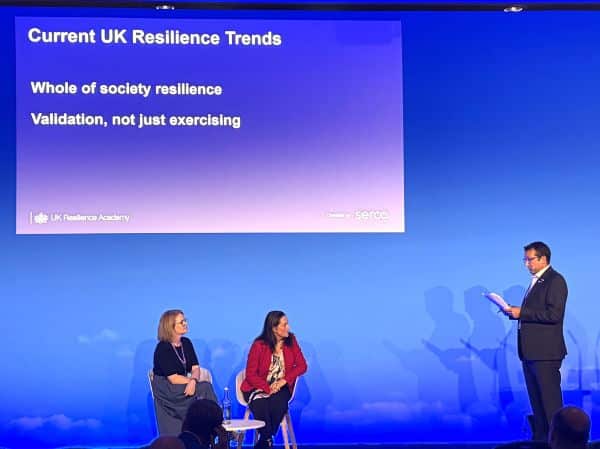 A consistent theme emerged: resilience is increasingly being built into systems. Whether discussing digital infrastructure, operational continuity, crisis management arrangements or cross-sector collaboration, the focus was on the processes, frameworks and mechanisms that enable organisations to anticipate, withstand and recover from disruption.
My presentation focused on a different, but equally important, aspect of resilience: people.
Drawing on the work of the UK Resilience Academy, I spoke about the role of individual and collective resilience in enabling organisations to perform effectively during times of uncertainty and disruption. While robust systems and well-developed plans are essential, they do not deliver resilience on their own. Ultimately, it is people who make decisions, adapt to changing circumstances, solve problems and lead recovery efforts when incidents occur.
One of my key reflections from the conference was that there was relatively little discussion about the human dimension of resilience. Many presentations rightly concentrated on building stronger systems, but there appeared to be far less focus on how we support and develop the people responsible for operating those systems.
This feels particularly important because systems inevitably have limitations. Technology can fail, plans cannot anticipate every scenario, and processes do not always work as intended. When that happens, it is people who bridge the gap. It is people who make sense of incomplete information, communicate under pressure, support colleagues, make difficult decisions and maintain public confidence. Resilient organisations therefore need resilient systems and resilient people.
The conference was a valuable opportunity to exchange ideas with colleagues from across the sector and to highlight the importance of investing in the human capability that underpins organisational resilience. As resilience challenges continue to evolve, developing confident, adaptable and capable people must remain a central part of the conversation.
After all, systems are critical, but when systems fail, it is people who make resilience real.
 Author: Vicky Crennell, Resilience Capability Lead